
Oneida Releases Occur in Caribou
The controlling local fact is easy to miss. The Oneida County Sheriff detention page says Oneida County has no jail or holding facility. Every person it incarcerates is taken to Caribou County Jail in Soda Springs. Oneida can own the arrest and transport record while Caribou owns the booking and physical exit transaction. The criminal case generally remains in the Oneida County court.
Three records therefore describe one local custody event. Oneida Sheriff records the arrest and transfer. Caribou records entry, confinement, and exit. iCourt records the judge’s orders and final case action. If the exit leads to IDOC, another jail, BOP, or ICE, the receiving agency adds a fourth record. Matching full name, birth date, case number, and dates across those sources is stronger than treating a roster disappearance as release.
The official county statement also prevents a common location error:
Find a Released Oneida Inmate
Begin with the custody type. A brief local jail stay may never appear in IDOC. A state prison transfer cannot be resolved through the county alone. Federal and immigration systems cover only their own custody. The following path keeps each search within its proper scope.
- Identify the Oneida event. Gather full name, aliases, birth date, arrest date, incident number, and case number when available.
- Call the physical custodian. Caribou County Jail can be reached at 208-547-3094. Ask if the person remains held and, if not, whether the exit was community release or transfer.
- Read the court case. Search the Idaho iCourt Portal by case number or
Last, First. Review the Register of Actions for bond, release, dismissal, judgment, sentence, or termination entries. - Check state status when relevant. Use the IDOC Resident/Client Search after an IDOC commitment or when probation or parole is plausible.
- Use VINE for a named person. VINELink can report custody changes and accept notification registration, but its alert is not the archival release record.
- Request the original records. Ask Caribou for booking and exit facts, Oneida for arrest and transport material, and the court for its documents.
- Continue only in a supported specialty channel. Use BOP for a federal relationship, ICE for possible current immigration custody, and the Idaho registry only for a covered registrant.
Important: A released person usually leaves a current-custody view. Absence can also result from transfer, delay, spelling, sealing, or a private display rule.
Oneida Release Record Fields
“Release record” is not one universal document. At the jail level, it is the closed booking or custody entry with an exit. IDOC may show “In community,” “Released to Supervision,” or “Discharged” with a date. The court shows the legal order or disposition. Each proves a different part of the event.
| Field to request | What it establishes |
|---|---|
| Name, aliases, and birth date | Identity for the exact booking |
| Booking and case numbers | Link between Caribou custody and the Oneida case |
| Booking date and facility | Start and place of the custody stay |
| Release date and time | When that custodian’s control ended |
| Reason or disposition | Bond, order, dismissal, time served, commitment, or transfer |
| Destination | Community or the receiving authority |
| Supervision information | Probation or parole that follows confinement |
| Booking photograph | Image tied to that booking, when releasable |
Caribou has not published a promised field list, so these are precise request terms rather than guaranteed labels. Ask for the existing record and an explanation of any abbreviated disposition code. A transfer destination is crucial. Without it, “released from Caribou” can be mistaken for freedom when custody merely moved.
Request Oneida Release Records
Start at the Oneida County public-record request page, which routes requests by office. For Sheriff arrest and transport material, the official contact page lists records@oneidasheriff.net. Ask Caribou County Sheriff separately for its booking and release entry because Oneida may not possess the out-the-door transaction.
- Describe the person and exact event with name, birth date, date range, incident number, booking number, or case number.
- Request existing records, not an agency-created narrative. Specify arrest/transport records to Oneida and booking/exit records to Caribou.
- Ask for release date and time, disposition, destination, and code definitions.
- Request an estimate before work that may incur a fee. No local fee is quoted because the available PDF amounts were not reliably confirmed.
- Keep each response and reconcile it with the iCourt docket or receiving agency.
Idaho Code § 74-102 creates the state presumption of public access, subject to exemptions, and sets the response and fee framework. The law does not make every detail public. Juvenile, sealed, exempt, or court-restricted material may be withheld or redacted.
No official Oneida or Caribou release-feed retention window was found. Do not assume a record stays online for 24 hours, 72 hours, 30 days, or forever. IDOC follows a different practice: its search says a person’s name can remain with a discharged date after sentence satisfaction, while conviction details do not remain in that presentation.
IDOC Search for Oneida Releases
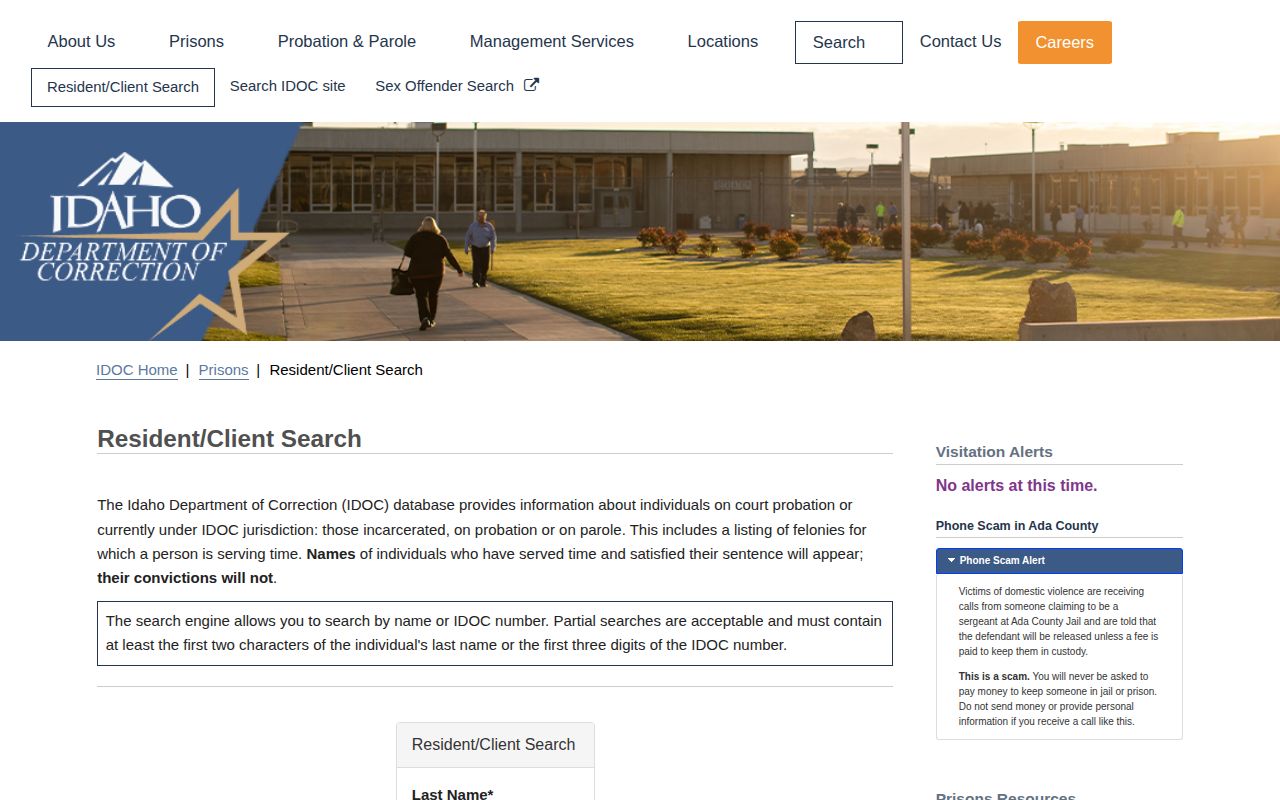
IDOC covers people on court probation or under state correctional jurisdiction through prison, probation, or parole. It is not a complete list of short Caribou County Jail stays. Search by a required last name or IDOC number; first name is optional. Partial searches accept at least two last-name letters or three IDOC digits. Compare the IDOC number, full name, birth year, and exact status because one person may have more than one IDOC number.
| IDOC label | Careful reading |
|---|---|
| In custody | The person remains within state custody |
| In community | The person is outside prison on active probation or parole |
| Released to Supervision | The date supervision began, not final discharge |
| Discharged [date] | The displayed IDOC sentence ended on that date |
| Active Bench Warrant | The public record shows a warrant status |
| Out of State Custody | Custody is identified outside Idaho |
IDOC warns that its public data update daily and can lag rapidly changing facts. A Caribou report of transfer should not be reversed merely because the person has not yet appeared. Likewise, a parole decision does not prove the person passed through the gate. Look later for “In community” and the Released to Supervision field.
The official IDOC form shows its scope and required fields:
Oneida Recent Release Options
Oneida publishes no jail roster or release list because it operates no jail. The research also found no verified official public Caribou roster, released filter, 24-hour list, 72-hour list, booking-photo field, update cadence, or retention statement. The accurate conclusion is that no official online feed was located, not that Caribou lacks internal release data.
For a recent window, call Caribou with a named person and ask the separate custody, time, disposition, and destination questions. Then use the court case and written record. The Oneida 24-Hour Releases and Oneida 72-Hour Releases pages explain how to build those periods without presenting a current roster as proof of past release.
Oneida Sheriff links an Idaho Facebook page for agency news, but no systematic release ledger was verified there. No Idaho Oneida sheriff inmate app was verified either. Similar app names point to Oneida counties in other states and should not be substituted.
Oneida Court Release Evidence
iCourt often remains useful after the jail event ends. Search by full case number or party name in the official Last, First format. Add a middle name or suffix to narrow similar results. The case can show the charge level, location, Register of Actions, orders, judgment, sentence, and disposition.
A court order states legal authority. It does not promise an instant physical exit. Processing, bond completion, another case, warrant, detainer, identity check, or receiving agency can keep custody active. Match the order to Caribou’s actual exit time. If the portal returns no result, correct the syntax before drawing any conclusion.
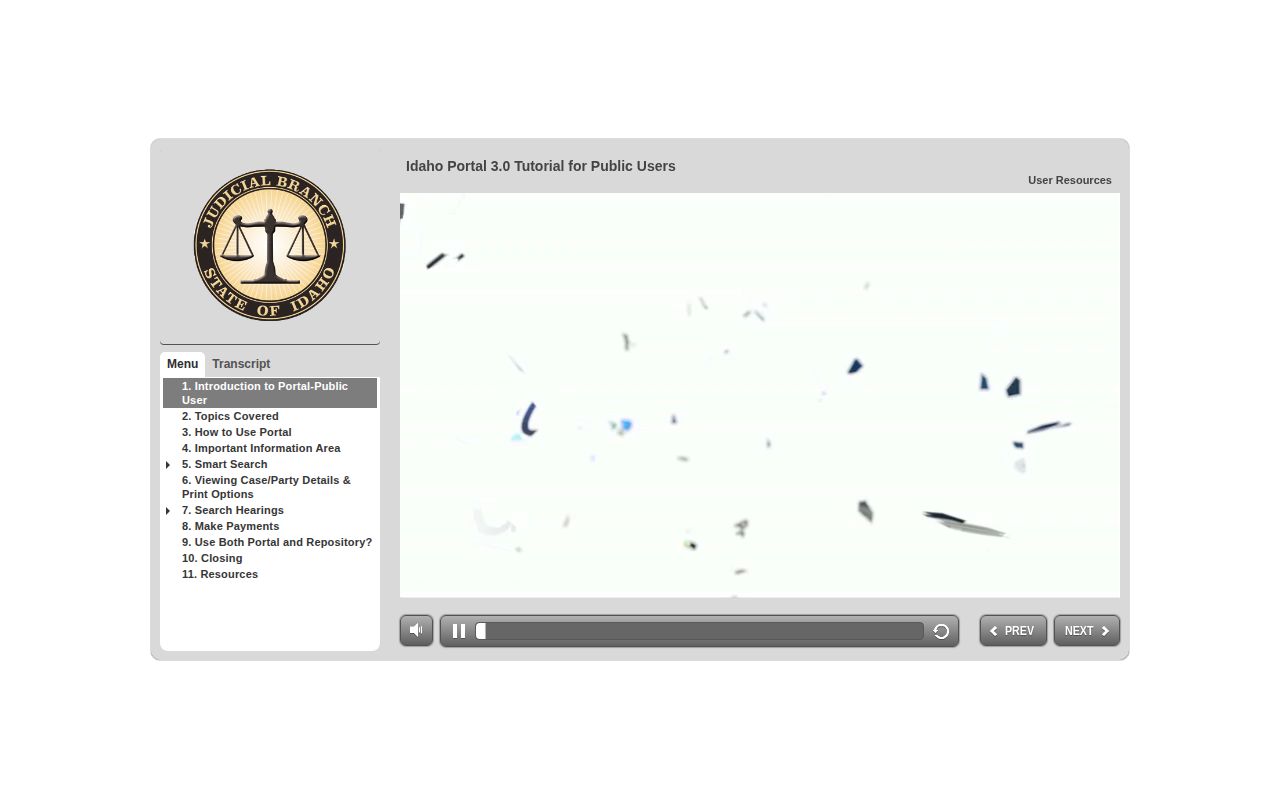
The official tutorial also explains that sealed cases and information unavailable under court rule can return no public result. A miss does not prove there was no case or that release occurred. The public search tutorial illustrates the required order:
Idaho Clean Slate shielding can make an eligible case unavailable to the public after statutory conditions are met. Shielding is not destruction. Idaho Code § 19-2604 separately provides forms of sentence or judgment relief for qualifying cases. Neither process means that every independently held jail or IDOC record automatically vanishes.
Oneida Post-Release Supervision
IDOC supervises state probation and parole; the Idaho Commission of Pardons and Parole decides parole. An IDOC “In community” record can show probation or parole, Released to Supervision, Sentence Satisfaction Date, Supervising District, officer, and phone. Leaving jail does not by itself mean no supervision follows.
Oneida belongs to IDOC District 6. Its Pocatello office and Preston and Soda Springs satellites serve a multi-county district. Use the officer and office displayed on the person record rather than guessing a satellite. The Oneida Probation office also lists pretrial, GPS, Drug Court, adult and juvenile supervision, and treatment-resource roles. A local pretrial case can coexist with bond release.
For final parole discharge, the Commission FAQ describes an official “Gold Seal” notice sent through the last district, sometimes taking up to a month. That document is better evidence that parole ended than absence from a list. Probation termination should be confirmed in the court order. More detail appears in Post-Release Supervision.
Oneida VINE Release Alerts
Idaho VINE provides free automated phone, text, and email updates about custody movement or status changes. Search a single person by name or offender ID, inspect the reporting facility, and register through Idaho VINELink. The Idaho VINE line is 866-984-6343. A four-digit PIN confirms receipt of telephone alerts; it is not an offender number.
A release alert is useful evidence that a participating source reported a change. It does not explain bond, time served, parole, transfer, or final sentence completion. Confirm details with Caribou, IDOC, or the court. Transfers can require registration again, so silence after a move does not prove custody ended.
The Idaho Sex Offender Registry answers a separate question. It applies only to covered registrants and offers name, county, city, ZIP, and map searches. Its email subscription can report a selected registrant moving into or out of Idaho. That is a relocation alert, not a jail release notification. A registry match or miss cannot replace VINE or a custody record.
Why Old Oneida Jail Listings Persist
The Sheriff’s history describes an old courthouse-basement jail arrangement and a one-room, six-bed cell constructed during a former sheriff’s 1993–98 tenure. That history helps explain stale directory references to a Malad jail. It does not override the current no-jail statement.
Use the current official custody chain. A person arrested in Oneida goes to Caribou for confinement. Someone sent to state prison goes into IDOC’s statewide system. A federal or immigration relationship uses the appropriate federal source. No current state prison, federal prison, or ICE detention center was identified inside Oneida County.
Getting Home After Oneida Release
The physical community exit occurs in Soda Springs, not at the Malad courthouse. No official fixed-route transport, family waiting point, or rideshare assurance was verified. Before anyone travels, call Caribou County Jail to confirm that processing is complete, that the event is a community release rather than transfer, and where the person will exit.
A judge’s order time is not a reliable pickup time. Other holds and processing steps can intervene. The research supports no fixed release schedule or promised processing period. Keeping the travel plan tied to direct custodian confirmation avoids a needless trip and prevents a transfer from being mistaken for release.
Federal and ICE Release Checks
Use the BOP Inmate Locator only when a federal custody relationship exists. It accepts a BOP, DCDC, FBI, or INS number, or a name with age, race, and sex filters. A location of RELEASED or a past release date means the person is no longer in BOP custody as of the displayed date. “Not in BOP Custody” needs more care because BOP says another correctional or law-enforcement system may hold the person.
The ICE Online Detainee Locator focuses on present ICE or qualifying CBP custody. Search with a nine-digit A-number and country of birth, or exact name, country, and birth date. A miss can reflect input or coverage limits and does not prove community release. No Oneida or Caribou ICE contract was verified, so ICE is a conditional path only when a custody record points there.
Compare Oneida Release Sources
Choose the system that originated the fact. Two sources may appear to disagree when they actually record different stages.
| Source | Best evidence | Key limit |
|---|---|---|
| Oneida Sheriff | Arrest and transport | May not own Caribou exit data |
| Caribou Jail | Booking, exit time, disposition, destination | No verified public online feed |
| iCourt | Orders, judgment, disposition | Not the physical gate time |
| IDOC | State custody, community supervision, discharge | Not every local jail stay |
| VINE | Status-change alert | Not a certified archival record |
| BOP or ICE | Specialized federal status | Only their jurisdiction and stated scope |
Resolve apparent conflicts by matching identifiers and asking a focused question. A bond order followed by a Caribou exit later that day can be fully consistent. A Caribou exit followed by an IDOC admission describes transfer. An IDOC “In community” label and an active parole sentence also coexist because prison custody ended while supervision continued. A tentative parole date beside “In custody” can mean required steps remain incomplete.
Record the exact wording and date from each source. Do not replace an official status with a broader term. When an agency’s display seems wrong, use that agency’s correction or records route. IDOC provides a Request for Information path, iCourt questions go to the court holding the case, and Caribou questions about the gate event belong with the jail custodian. If the evidence cannot be reconciled, state that limit rather than choosing the more dramatic interpretation.
Oneida Detention Facility
The resolved facility map contains one serving jail: Caribou County Jail, operated by the Caribou County Sheriff’s Office in Soda Springs. There is deliberately no “Oneida County Jail” page because no such current facility exists. The facility page covers contact, community release versus transfer, records requests, the historic source of location confusion, and travel planning for an exit.
Search Released Inmates
Sponsored Results