
Oneida 24-Hour Release Access
Neither the Oneida County detention page nor a verified Caribou County government source provides an official online 24-hour release list. Oneida states that it has no jail and that all incarcerated people are taken to Caribou County Jail. Research also located no official Caribou live roster, released filter, posting schedule, or retention statement. That gap does not mean the jail keeps no booking or release data. It means the data could not be verified as a public feed.
For a person thought to have left custody today, call Caribou County Jail at 208-547-3094. Ask whether the person remains physically held. If not, ask for the exit date and time, the disposition, and the receiving authority when the event was a transfer. Those separate questions prevent “not here” from being mistaken for release to the community.
Check Oneida Releases Today
The fastest route is a narrow, identity-safe check. Have a full name, date of birth, approximate arrest date, and case or incident number when known. Use the Oneida released-inmate search paths if the goal is to find one named person across several systems rather than review one day.
- Call Caribou County Jail at 208-547-3094 and ask if the person is still physically held.
- If the answer is no, request the exit date and time plus the release or transfer disposition.
- Search the Oneida case in iCourt Smart Search using a case number or the required “Last, First” name order.
- Request the existing jail release record from Caribou and the arrest or transport record from Oneida Sheriff at records@oneidasheriff.net.
- If transfer to state custody is possible, check the IDOC Resident/Client Search.
A court order may explain why release was authorized, but it is not the exact physical exit time. The jail record supplies that operational fact. Conversely, leaving the jail does not show whether the case was dismissed, bond was posted, time was served, or another agency received custody.
Oneida 24-Hour Record Fields
No official public Oneida or Caribou same-day table was verified, so these are fields to request from an existing booking and release record. Availability and redaction depend on the custodian and Idaho law.
| Requested field | What it can establish |
|---|---|
| Full name and identifiers | Helps distinguish a person from a namesake. |
| Booking or jail number | Connects the answer to one custody event. |
| Booking date and time | Marks entry into the jail process. |
| Release date and time | Records the physical exit processed by the custodian. |
| Disposition or reason | May distinguish bond, court order, time served, transfer, or another coded result. |
| Receiving authority | Shows where to continue when custody did not end. |
| Charge, bond, and case fields | Help match the jail event to the Oneida court case. |
Ask for a code explanation when a disposition uses an abbreviation. A durable request should seek an existing record or a defined extract for a narrow time range. It should not demand that an agency create a daily list that it does not maintain.
Where Oneida Releases Are Processed
Oneida’s custody chain is unusual. The arrest and prosecution may belong to Oneida County, while the booking and physical release occur at Caribou County Jail in Soda Springs. The person normally is not walking out of the Malad courthouse. Family members should verify the place and timing with the Caribou custodian before making a trip.
The official source does not state release hours, an exit door, weekend practice, a waiting point, property return steps, or transport options. None should be assumed. Call ahead and ask only for the current event. The same caution applies to a person who is “gone” from Caribou: a transfer to IDOC is a move within custody, not a community release.
The county detention statement shows the no-jail arrangement:
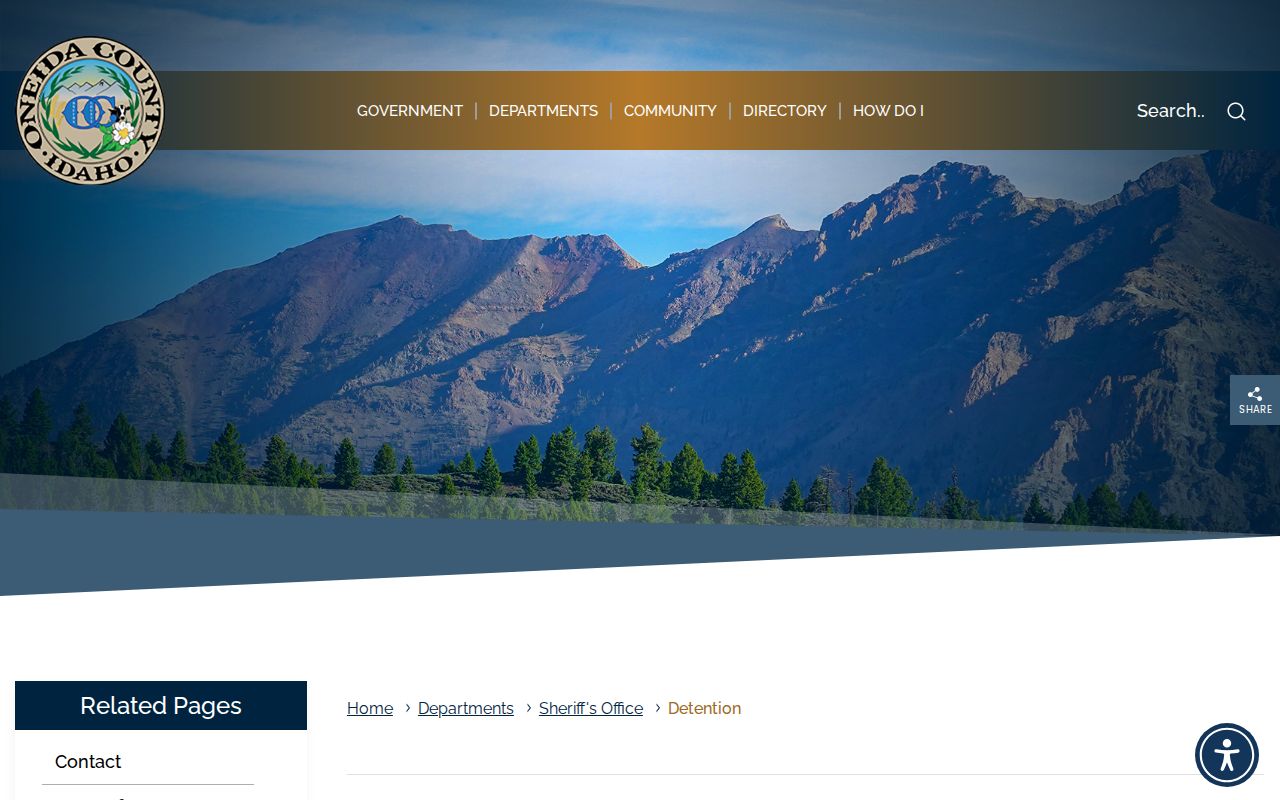
This source is why a Oneida same-day check must begin with Caribou rather than a presumed Malad jail roster.
No Oneida Sheriff Release App
No verified Idaho Oneida sheriff mobile inmate app was found. Similar names can point to Oneida counties in New York or Wisconsin, which creates a real risk of checking the wrong jurisdiction. The Idaho sheriff links to a Facebook page for agency information, but no systematic release ledger was verified there.
A third-party Caribou booking site may help identify a possible spelling or booking date. Its entries are not official. A booking listing proves neither current custody nor release, so any lead must return to Caribou County Jail, the release record, or the court case.
Getting Home After Oneida Release
No official source verifies transportation, discharge assistance, or a family waiting area for people leaving Caribou County Jail after an Oneida arrest. The safe approach is to confirm that release is actually complete, ask the jail where pickup is permitted, and avoid relying on an expected time. Processing can change after a court event.
If a condition of release or local supervision applies, the Oneida County Probation office lists pretrial services, monitoring, testing, and treatment resources. State parole or felony probation is handled through IDOC District 6. Leaving the jail and ending supervision are different events.
Oneida Custody Versus Release
Use the status shown by the responsible system. “In custody” means confinement continues. “In community” in an IDOC record can mean the person is under parole or probation. “Discharged” is a corrections status with a date, while “Released to Supervision” is the most recent placement on supervision and does not mean supervision ended.
| Evidence | Safe conclusion |
|---|---|
| Caribou confirms physical release | The local jail event ended as described by its record. |
| Caribou names a receiving agency | Custody continues in another system. |
| iCourt shows a release order | The court authorized action; obtain the jail time stamp. |
| IDOC shows “In community” | The person may be on state supervision. |
| Idaho VINE alert | A reporting agency sent a status change; verify the final details. |
For a wider date range, use the Oneida County 72-Hour Releases. Idaho VINE can send phone, text, or email status notices, but it is a notification channel rather than a certified release record.
Resolve Oneida Release Conflicts
A same-day check can return several true facts about different moments. Caribou may report that a person left its building, while IDOC reports that the person is in custody. That combination points to a transfer, not release to the community. An iCourt order may also appear before jail staff finish the exit process.
Match each fact to its owner. Caribou controls booking and exit data. The Oneida court controls orders. IDOC controls state custody, supervision, and discharge labels. VINE reports a change sent by an agency, but an alert does not replace the record.
If details differ, compare date of birth, booking number, IDOC number, case number, and aliases. Ask the custodian to explain codes. Do not merge separate bookings because they share a name. An event-by-event timeline is safer than a broad claim of release.
Oneida Public Record Timing
Idaho’s public-record framework permits inspection and copying unless another law provides otherwise. State materials describe response limits, possible extensions, fees, and advance payment. Those rules do not make every booking field or photograph public.
For today’s status, call first. Use a written request when the exact time, disposition, or transfer destination must be documented. Investigatory, privacy, security, juvenile, sealed, and court-restricted material can be withheld or redacted. Confirm cost before ordering copies.
Oneida Bond Order Still Held
An iCourt bond or release order does not guarantee an immediate exit from Caribou County Jail. Processing may still be under way. A different case, warrant, detainer, identity check, incomplete bond step, transport, or another agency’s hold can also keep custody in place. A detainer is a request or legal basis for holding someone for another authority.
Confirm that the order and booking belong to the same person by matching the date of birth, case number, and event date. Then ask Caribou whether the order has been carried out and whether the disclosable record names another hold or receiving authority. The supplied research verifies no Caribou processing schedule, so a fixed number of hours or a guaranteed same-day release would be unsupported.
If release occurs, record the court order time and Caribou exit time as separate facts. The order explains legal authority. The jail record shows when and how the person physically left that facility. This is why an Oneida court result and Caribou release confirmation work as parallel evidence.
Oneida Transfer to IDOC
When Caribou reports a transfer to IDOC, leaving the county jail is not release from custody. Search IDOC by last name or IDOC number and compare birth year and middle name. Some people may have multiple IDOC numbers, so review close matches rather than selecting the first similar name.
An “In custody” result confirms state jurisdiction. If no match appears at once, do not reverse Caribou’s verified transfer. IDOC says public data update daily, and a fast-moving admission can take time to appear. The accurate interim result is that Caribou reported a transfer while the public IDOC display was not yet confirmed.